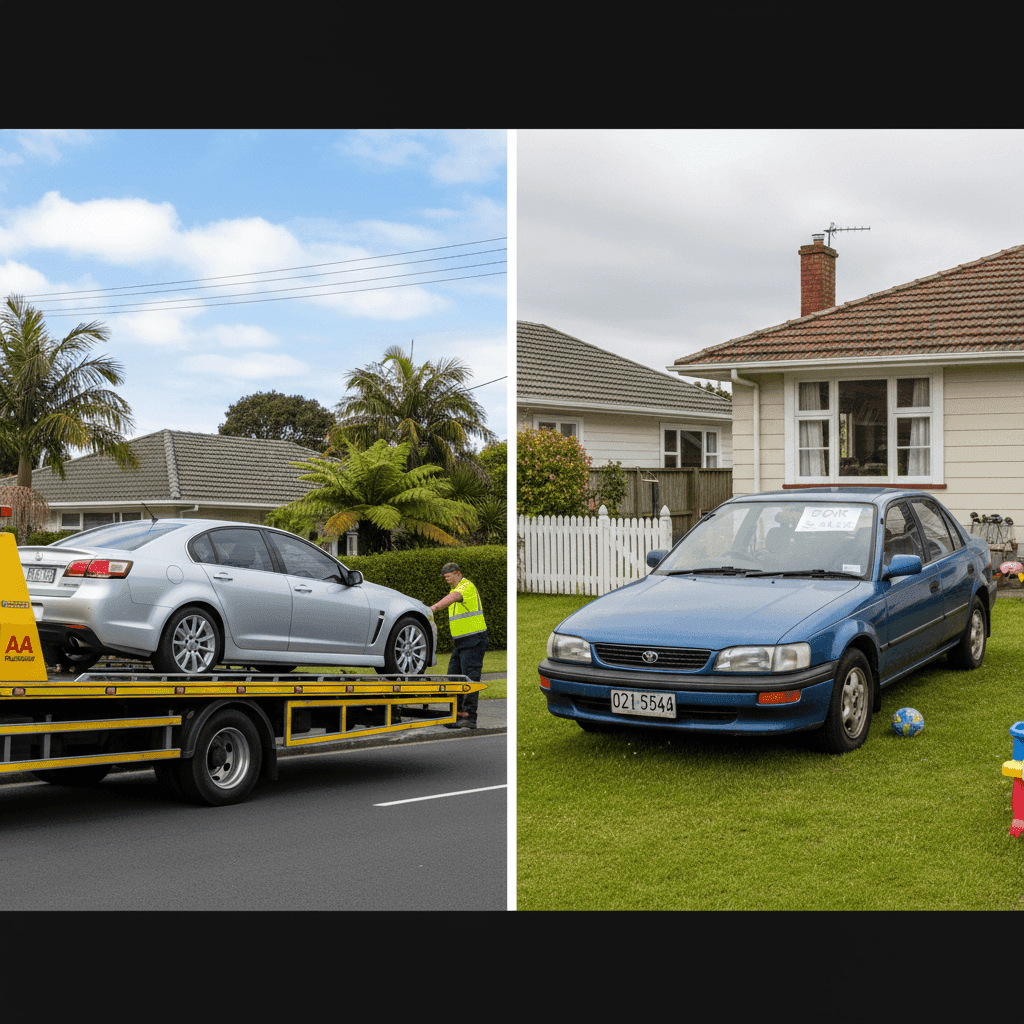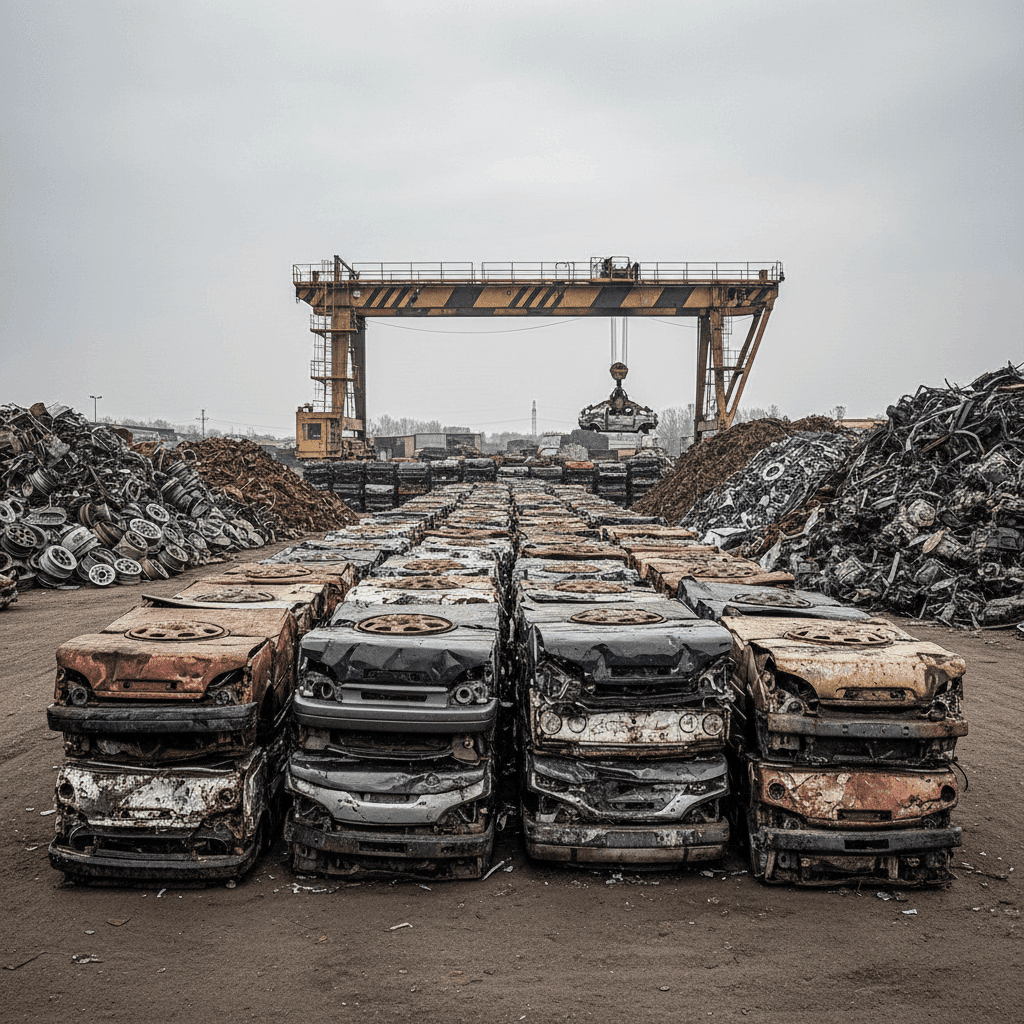
Once a scrap car leaves your property, it enters a surprisingly detailed recycling pipeline. Most people never think twice about it — you got paid, the car's gone, job done. But behind the scenes, trained operators dismantle, decontaminate, and recover materials from every vehicle in a process that's equal parts engineering and environmental protection. Here's how it works, step by step.
Stage 1: Depollution — Removing the Nasty Stuff
Before anything is unbolted or crushed, the vehicle goes through depollution. This is the single most important environmental step, because a typical car contains several litres of fluids that would contaminate soil and groundwater if left unchecked:
- Engine oil — drained and forwarded for re-refining or industrial reuse
- Coolant and antifreeze — captured and processed through licensed disposal
- Brake fluid — classified as hazardous waste and disposed of accordingly
- Transmission and power-steering fluid — drained and recycled where viable
- Remaining fuel — siphoned out for reuse or safe disposal
- Air-conditioning refrigerant — recovered under strict protocols to prevent atmospheric release
In Mid Canterbury, where the region's clean water supply draws from a shallow aquifer beneath the plains, this step carries extra weight. Dumping an old car in a paddock might seem harmless, but leaking fluids can reach groundwater surprisingly fast through Canterbury's porous gravel soils. Using a licensed scrap car service guarantees those contaminants are handled properly.
Stage 2: Salvaging Reusable Parts
With fluids removed, the team moves on to stripping parts that still have life in them. Typical salvage items include:
- Engines and gearboxes (tested and resold if functional)
- Alternators, starter motors, and wiring looms
- Body panels, bumpers, doors, and bonnets
- Alloy wheels and road-legal tyres
- Seats, dashboards, mirrors, and interior trim
- Headlamps, tail lights, and indicator assemblies
These components are cleaned, catalogued, and sold as second-hand replacements — giving vehicle owners access to affordable parts and keeping functional gear out of the waste stream. It's a core part of the circular economy around vehicles.
Stage 3: Batteries and Tyres
Both items get their own handling channel. Lead-acid batteries are among the most recyclable products on earth — the lead is smelted and recast, the acid neutralised, and the plastic casing reprocessed. Recovery rates sit close to 100%.
Tyres are pulled and managed under New Zealand's regulated tyre-stewardship framework. End-of-life tyres are:
- Retreaded for continued road use where possible
- Shredded for use in roading base or civil-engineering fill
- Converted into tyre-derived fuel for industrial kilns
- Processed into granules for playground surfaces and sports tracks
Stage 4: Crushing and Shredding
Once every reusable part, fluid, and hazardous component is gone, the stripped shell is flattened by a hydraulic crusher. From there it feeds into an industrial shredder — a machine powerful enough to tear a car body into fist-sized chunks in seconds.
Those chunks are then sorted automatically:
- Ferrous metals (steel, cast iron) — pulled out by powerful magnets and shipped to steel mills
- Non-ferrous metals (aluminium, copper, zinc, brass) — separated using eddy-current technology and sold to smelters
- Automotive shredder residue (ASR) — the leftover mix of plastics, textiles, rubber, and glass, which is processed further or directed to approved landfill
Stage 5: Metal Goes Full Circle
Separated metals are transported to foundries and mills where they're melted down and reformed into raw stock. A single scrapped car yields roughly 800 kg of recyclable steel and 50–60 kg of aluminium. That recovered metal feeds back into manufacturing — new vehicles, structural steel, appliances, and building products all use recycled automotive metal.
Overall Recovery Rate
Modern auto recycling operations recover about 85% of a vehicle by weight. The remaining 15% — primarily mixed plastics, composite materials, and contaminated textiles — is an area where recycling technology continues to advance. New processes for recovering automotive polymers are steadily pushing that figure higher year on year.
Why Proper Scrapping Matters on the Canterbury Plains
Every abandoned car that sits rusting in a paddock is a slow-motion environmental incident. Oil drips into gravel, battery acid corrodes into topsoil, and coolant pools where stock drink. Canterbury's flat, permeable landscape means those pollutants have a short path to the water table. Scrapping a vehicle through a licensed operator stops that chain entirely — fluids are contained, metals are recovered, and nothing is left behind to leach. Recycling one car also avoids the need to mine roughly 2,500 kg of iron ore, burn 1,400 kg of coal, and quarry 120 kg of limestone. The environmental arithmetic is straightforward.
Proper car removal through a licensed operator protects both your land and the wider Canterbury environment.
Ready to Scrap Your Vehicle?
If there's an end-of-life car, ute, or truck on your property, we'll take it from here. Free same-day collection and cash paid before the vehicle leaves. We operate right across the district — Methven, Rakaia, and the wider Mid Canterbury region. Call 03 565 4711 or request a quote online.