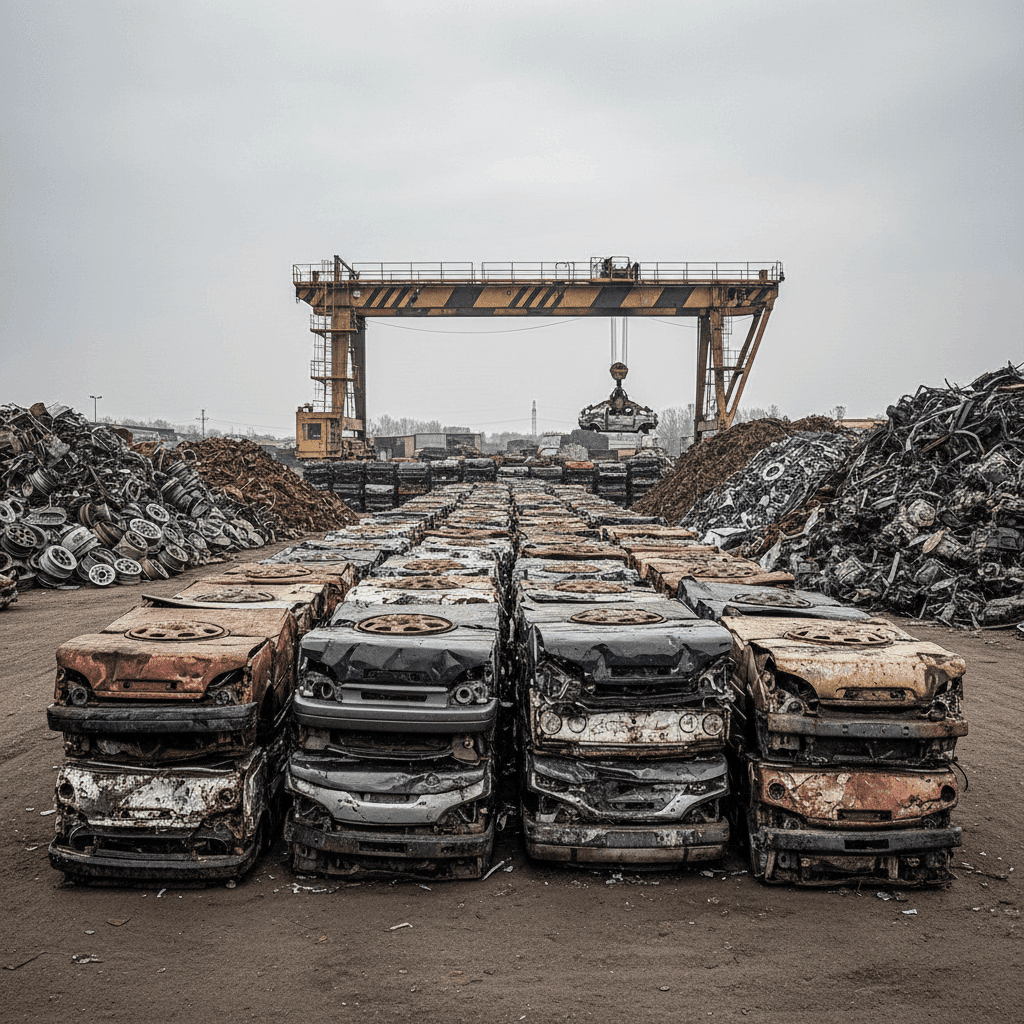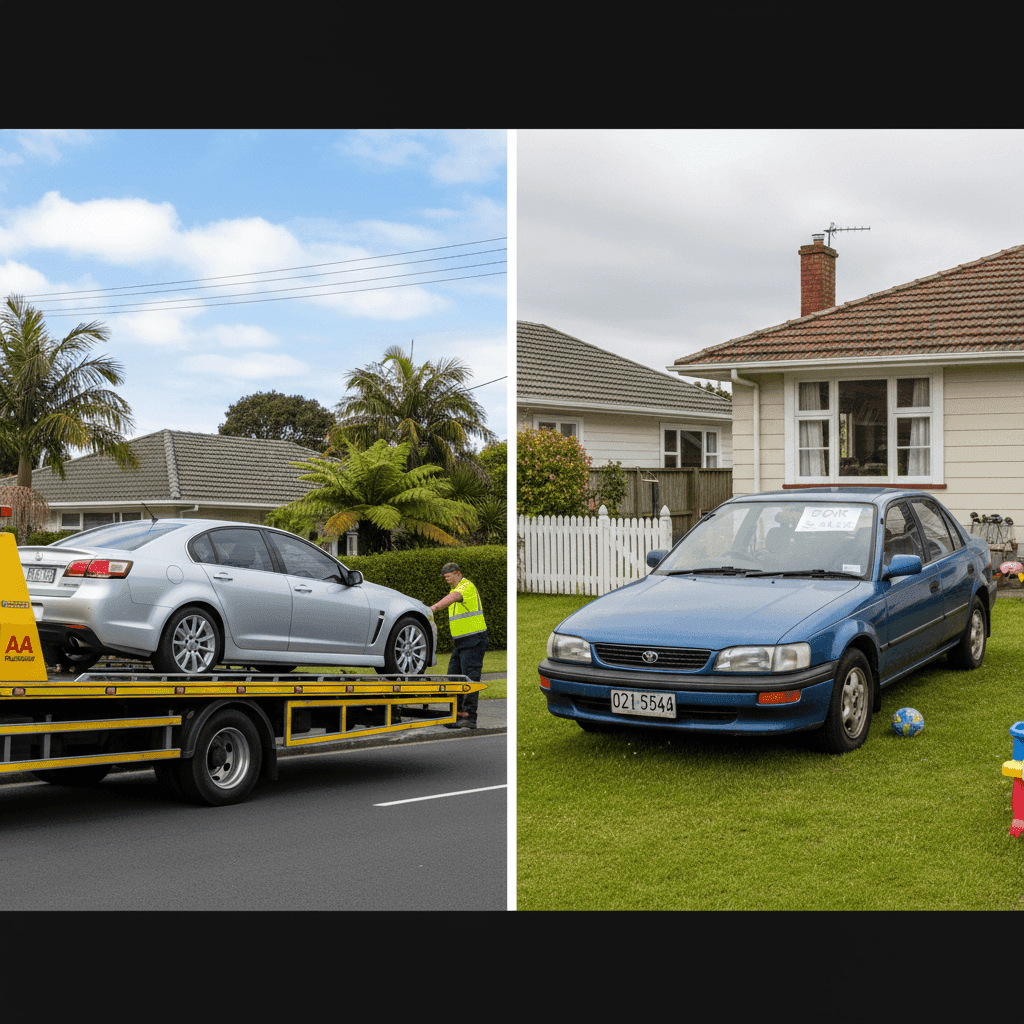
Drive down any back road between Ashburton and the foothills and you'll spot them — old utes parked behind woolsheds, sedans sinking into paddock grass, trucks that haven't turned over since the last drought. On Canterbury farms, retired vehicles tend to accumulate because getting rid of them feels like more effort than it's worth. But those rusting hulks are more than just an eyesore. They're an environmental risk, a potential compliance issue, and — as it turns out — a source of cash you might not have considered.
Why Farm Vehicles Pile Up
The reasons are practical. Rural properties have space, so there's no urgency to move an old car. The nearest wrecking yard might be in Christchurch — an hour and a half away — and organising a tow from that distance costs money. Private sales are near-impossible for vehicles without a warrant, and in a small market like Ashburton, buyers for rough-condition cars are few and far between.
So the vehicle stays. It gets pushed to the edge of the yard, the grass grows around it, and eventually it becomes part of the scenery. One car becomes two, then three. Before long, the corner of the paddock looks like an unofficial scrapyard.
The Environmental Problem
A car sitting in a paddock isn't just sitting. It's slowly leaking. Engine oil, gearbox fluid, coolant, and battery acid seep into the soil over months and years. On the Canterbury Plains, where the water table is relatively shallow and the gravel subsoil is highly permeable, those contaminants have a direct path to the aquifer that supplies drinking and irrigation water across the region.
Rusting fuel tanks can release petrol or diesel into surrounding soil. Brake pads contain heavy metals. Older vehicles may still have asbestos in gaskets and clutch components. None of this is catastrophic in isolation, but multiply it by every neglected vehicle on every farm across Mid Canterbury and the cumulative effect is real.
Environment Canterbury takes a dim view of unmanaged vehicle dumping on rural land, and while enforcement is typically complaint-driven, it's an issue that's increasingly on the radar.
What Your Old Farm Vehicles Are Actually Worth
This is where the conversation gets more interesting. That "worthless" Hilux behind the shed? It's sitting on 800-odd kilograms of recyclable steel, plus aluminium, copper wiring, and potentially salvageable mechanical parts. A clapped-out Corolla still carries scrap value in its body weight alone.
Typical payouts for farm vehicles in the Mid Canterbury area:
- Small cars (Corolla, Demio, Civic) — $300 to $1,500 depending on completeness and condition
- Utes and 4x4s (Hilux, Ranger, Navara) — $800 to $5,000+ given strong parts demand
- Vans and light trucks — $500 to $4,000 based on weight and salvageable components
- Completely stripped shells — $200 to $500 in pure scrap metal value
Many farmers are surprised to learn they're sitting on several thousand dollars' worth of metal across a few old vehicles. The maths changes when someone is willing to come to your property, load the lot, and pay cash on the spot.
How We Handle Farm Vehicle Collection
We run flatbed tow trucks equipped for rural access — sealed roads, gravel, farm tracks, whatever the approach requires. Here's how a typical farm pickup works:
- You call or fill in our online form — describe the vehicles (make, model, rough condition) and we'll quote over the phone.
- We schedule a collection run — for multiple vehicles on one property, we'll often bring two trucks or make a return trip. Same-day service is standard for the Ashburton district.
- Our driver arrives with cash — each vehicle is paid for individually at the agreed price. You count the cash before we load anything.
- We handle the removal — winching out of paddocks, loading from sheds, dragging off grass — our gear is built for it. No charge for collection, regardless of difficulty.
- Paperwork is sorted — we lodge change-of-ownership and deregistration with Waka Kotahi for every vehicle. You receive nothing further in the mail.
Multiple Vehicles? Even Better
If you've got two, three, or more vehicles to clear, the combined payout adds up. We regularly visit Canterbury farms and collect several vehicles in a single trip. It's efficient for us and more lucrative for you — and by the end of the day, that corner of the paddock is clear for the first time in years.
A Word on Japanese Imports
Canterbury farming has long relied on Japanese-built utes and 4x4s — the Hilux, Navara, Ranger (Mazda BT-50), and D-Max in particular. These vehicles command stronger prices even at end of life because parts demand is consistently high. If you've got a retired Japanese work vehicle on the property, it's almost certainly worth more than you think.
The Smart Move
Clearing old vehicles off a farm property isn't just about tidiness. It removes an environmental liability, frees up usable space, and puts genuine cash in your account. With free collection from anywhere in the district — including remote rural properties — there's no cost or inconvenience involved.
If you want to sell farm vehicles for cash or simply get a quote on what that old ute behind the shed is worth, give us a ring on 03 565 4711 or submit your details online. We cover all of Mid Canterbury — from Methven to Rakaia to Hinds and beyond.